Why I Wrote Unbroken Legacy: The Divine Seed
People sometimes ask me why I wrote Unbroken Legacy: The Divine Seed. The answer is simple: I wrote the book I needed to read.
I wrote it because I came to believe that the greatest power we possess is not something we acquire from the outside. It already lives within us, waiting to be remembered. I wanted to write a story that reminds readers that beneath fear, self-doubt, and inherited pain, there is something whole and unbroken—a divine seed that has been there all along.
More than anything, I wrote this book for parents. Parenting has taught me that raising a child is also an invitation to raise ourselves. Every challenge our children present asks us to look inward. Every fear they awaken invites us to heal something within ourselves. In learning to nurture them, we are given the opportunity to nurture the wounded child we still carry inside us.
…the greatest power we possess is not something we acquire from the outside. It already lives within us, waiting to be remembered.
I have come to believe that our children are among our greatest teachers. They arrive in our lives not simply to be shaped by us, but to shape us in return. If we are willing to listen, they reveal our deepest fears, our hidden wounds, and our greatest capacity to love.
It is often for our children that we discover a courage we never knew we possessed. We face fears we might have avoided if only our own lives were at stake. We begin asking difficult questions about the patterns we inherited and whether they deserve to be passed on.
That is why I believe healing is never only personal. Every step we take toward wholeness changes the lives of those who come after us. The legacy we leave our children is not merely financial or material. It is emotional, psychological, and spiritual.
The legacy we leave our children is not merely financial or material. It is emotional, psychological, and spiritual.
One of the central ideas in Unbroken Legacy is that trauma moves through generations until someone is willing to face it. Fear, shame, anger, guilt, and silence continue their work until one person has the courage to stop running and turn toward what has been hidden. That person becomes the cycle-breaker.
The Language of Childhood Is Not Childish
This story is told in the language of childhood because some truths cannot be explained—they must be experienced.
That language is uniquely suited for speaking about the deepest parts of the human experience. Childhood is where fear first takes shape. It is where imagination first becomes power. It is where beliefs are planted that can either nourish us—or quietly govern us for decades.
To write honestly about trauma, courage, healing, and inheritance, I had to return to that language, not because it is simple, because it is true.
Symbols, dreams, and monsters allow us to approach realities that are often too painful to face directly. They give shape to experiences that ordinary language struggles to describe.
Who the Book Is Really For
People often ask whether this is a YA book or a book for adults. I believe it is both. It is for teens learning to trust the light within themselves, and for parents who want to leave their children something more valuable than success—a healthier emotional legacy. And it is for every grown-up who still carries the child they once were.
I hope this book finds its way into high school classrooms because it offers students a symbolic language for discussing fear, power, identity, trauma, and hope without reducing those subjects to simple answers.
As someone who wrote this story while healing parts of himself, I know it often speaks just as deeply to adults—perhaps even more deeply. Many of us still carry the child we once were. We carry not only old wounds, but also forgotten wonder, resilience, and wisdom. Somewhere along the way, we stop believing that those buried parts of ourselves can be rediscovered. This story is an invitation to remember that they can.
This Story Is Not an Escape
The world inside Unbroken Legacy is not meant to help readers escape reality. It is meant to help them return to it with new eyes. In this story, monsters are not simply defeated. They are understood. Fear is not destroyed. It is transformed. The greatest victory is not domination over darkness, but remembering that darkness was never the whole story.
Why You Should Read It
I wrote Unbroken Legacy: The Divine Seed to remind readers that healing is possible. That courage often begins with a single honest step. And that what first appears to be tragedy can, over time, become the very thing that gives our lives meaning.
Most of all, I wrote it to remind people that the greatest inheritance we leave our children is not what we give them. It is what we stop passing on.
If you've ever wondered whether the fears you carry truly belong to you...
If you've ever sensed that something sacred still lives beneath your doubts...
If you've ever believed that imagination can reveal truths reason alone cannot...
Then this story was written for you.
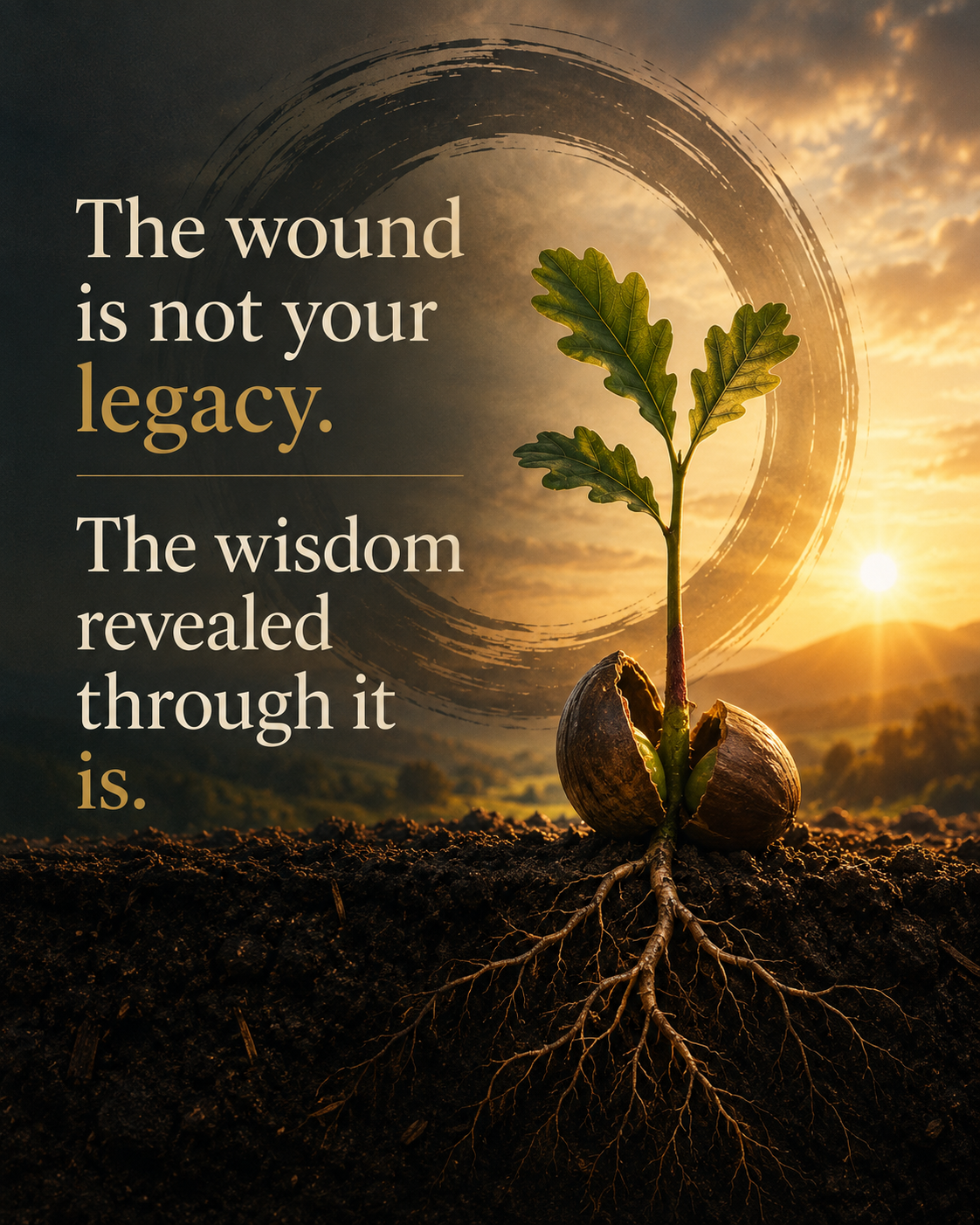
We do not have to inherit the wound in order to inherit the wisdom.
We often hear that trauma is passed from one generation to the next. I believe that's true—but it is not the whole truth. Trauma may be inherited, but it is not our deepest inheritance. Beneath every wound lies something older and stronger. Beneath fear lives courage. Beneath shame lives dignity. Beneath every inherited story of limitation lies an unbroken wisdom waiting to be remembered. The purpose of healing is not simply to stop passing on our wounds. It is to uncover the wisdom buried beneath them.
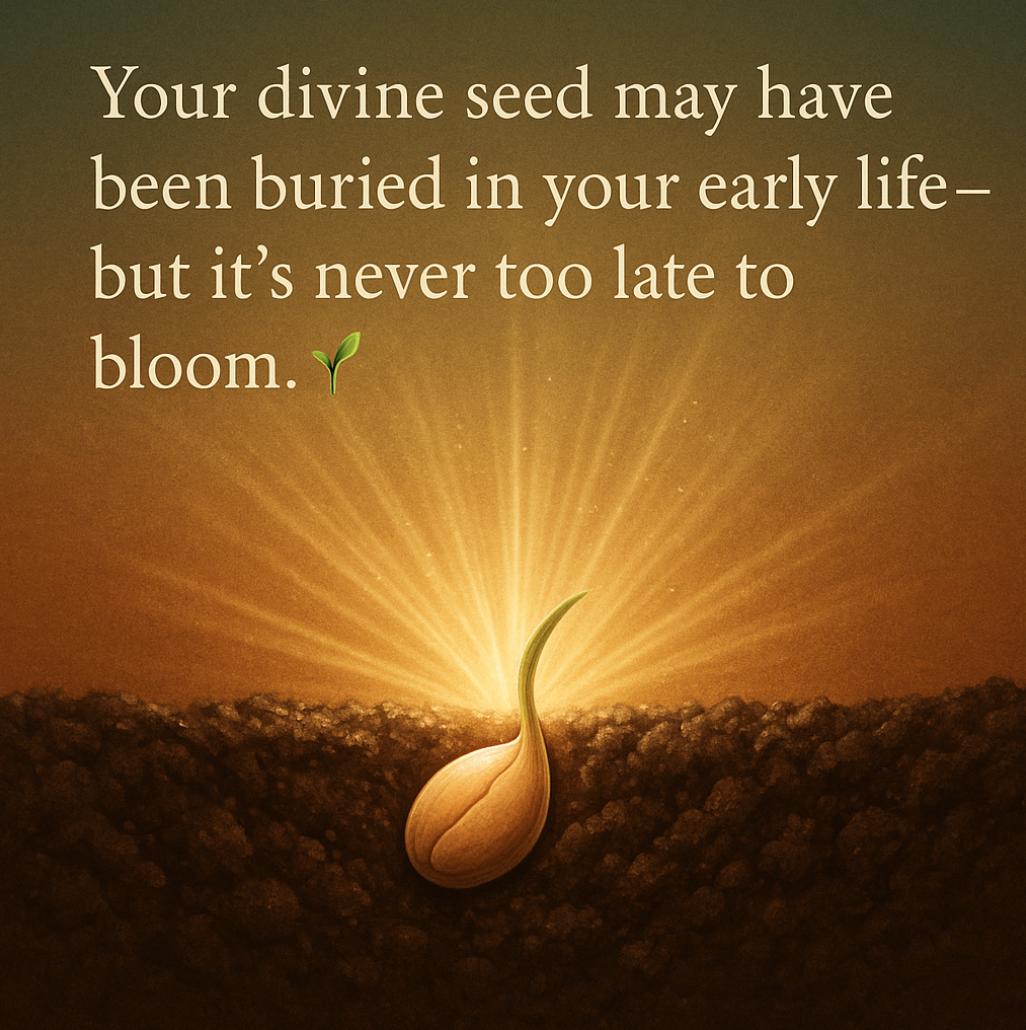
We do not have to inherit the wound in order to inherit the wisdom. That is what I mean by The Divine Seed. Your greatest inheritance is not your family's wounds. It is the wisdom that survived them. The work of a cycle-breaker is to uncover that wisdom so the next generation can inherit the gift without inheriting the pain.
The purpose of healing is not simply to stop passing on our wounds. It is to uncover the wisdom buried beneath them.